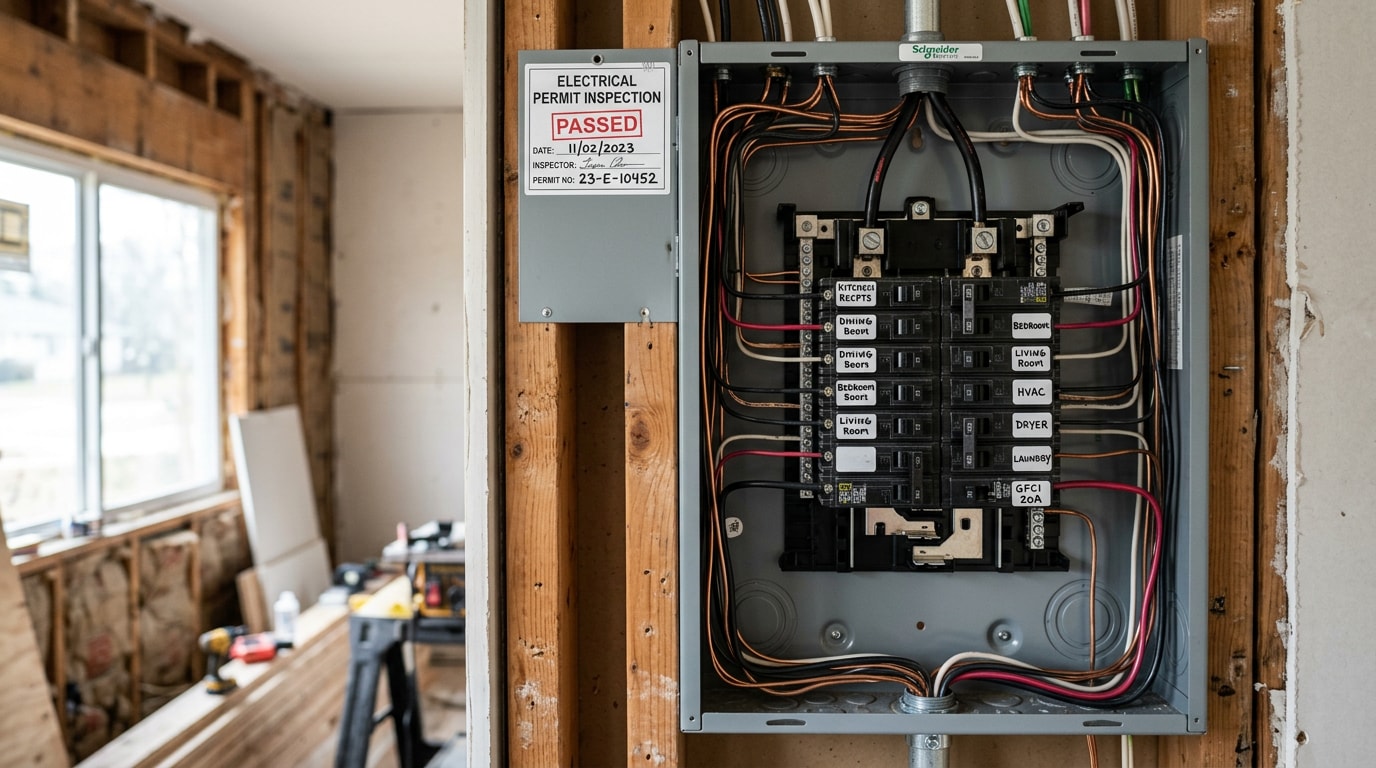
If a renovation bid looks padded beyond your materials and labor line items, you're seeing general contractor markup, the built-in margin every licensed GC in Jefferson and Shelby County needs to stay in business. This guide breaks down what that markup actually funds, what's normal in Vestavia Hills in 2026, and the one red flag that separates a fair quote from a lowball one. For a project-specific number, our Vestavia Hills team can walk you through a line-by-line estimate.
Key Takeaways
- Blended general contractor markup typically lands between 20% and 30% of total project cost in 2026, covering overhead, risk, and a reasonable profit, not pure padding.
- Materials usually carry a lighter markup, often 7.5% to 10%, while labor markup swings much wider, commonly 20% to 50%.
- Vestavia Hills adds its own cost layer: the city requires a separate business license on top of state licensing, and that compliance cost gets built into every bid.
- A markup far below 20% on a full remodel is more often a warning sign than a bargain.
What Is General Contractor Markup in Vestavia Hills, AL?
General contractor markup is the percentage added to direct project costs, materials, labor, and subcontractor fees, so the contractor can cover overhead and earn a profit. It isn't pure profit. Most of it funds expenses the homeowner never sees itemized on an invoice.
In Vestavia Hills and the wider Birmingham metro, that markup also has to absorb costs specific to this area. Jefferson and Shelby County permit fees, general liability and workers' comp insurance, and the premium often paid for skilled trades in a tight local labor pool all get folded into the number. A contractor quoting too thin a margin here may be cutting corners somewhere you won't notice until later.
There's also a local compliance cost most national pricing guides miss entirely. The City of Vestavia Hills requires any general contractor performing residential work over $10,000, or commercial work over $50,000, to carry a separate city business license on top of their state credential, and that license has to be renewed and tied to a current Alabama Home Builders or general contractor's card. Verifying this through the City of Vestavia Hills Building Safety office takes a few minutes and tells you more about a contractor's legitimacy than comparing bid totals ever will.
When our crews price a kitchen remodel or a full addition in this market, the markup line covers county permit runs, active liability coverage on the job site, and a project manager coordinating every trade, not padding. Understanding that breakdown matters before you compare bids from any custom home building team in the area, because a lower number up front doesn't always mean a better deal.
Markup vs. Profit Margin
Markup and profit margin get used interchangeably, but they're calculated from different bases, and the gap between them surprises a lot of homeowners.
Margin is profit measured as a percentage of the selling price, or revenue. Markup is profit measured as a percentage of cost. Those two bases produce very different numbers from the same job.
Here's a worked example. A contractor targeting a 25% profit margin on a $200,000 job needs roughly a 33% markup to hit that target, not 25%. On that same job, a 33% markup on $200,000 in direct costs pushes the final bid to about $266,000, with profit representing 25% of that final number rather than 33%. The math flips depending on which base you start from.
What Is the Average General Contractor Markup in 2026?
Blended markup for residential general contractors in 2026 typically runs 20% to 30%, with the exact figure shaped by project type, region, and how much risk the contractor is absorbing on a given job.
The National Association of Home Builders tracks this nationally through its construction cost survey. In the most recent data, builder profit represented 11.0% of the final sale price, with overhead and general expenses adding another 5.7%, a combined share that lines up closely with the "10 and 10" benchmark many contractors still use as a floor. Alabama's cost of living and labor rates generally run below coastal and major-metro markets, which tends to put Vestavia Hills projects toward the lower-to-middle end of the national range rather than the top.
| Project Type | Typical Markup Range | What Drives the Range |
|---|---|---|
| Kitchen or bath remodel | 15% – 25% | Demo surprises, tight scheduling, finish-level choices |
| Home addition | 18% – 28% | Foundation work, matching existing structure, permitting |
| New custom home | 15% – 20% | Larger cost base spreads overhead over more dollars |
| Commercial build-out | 10% – 20% | Volume, longer timelines, more standardized specs |
| Emergency or rush repair | 30% – 50% | Compressed schedule, after-hours labor, limited bidding |
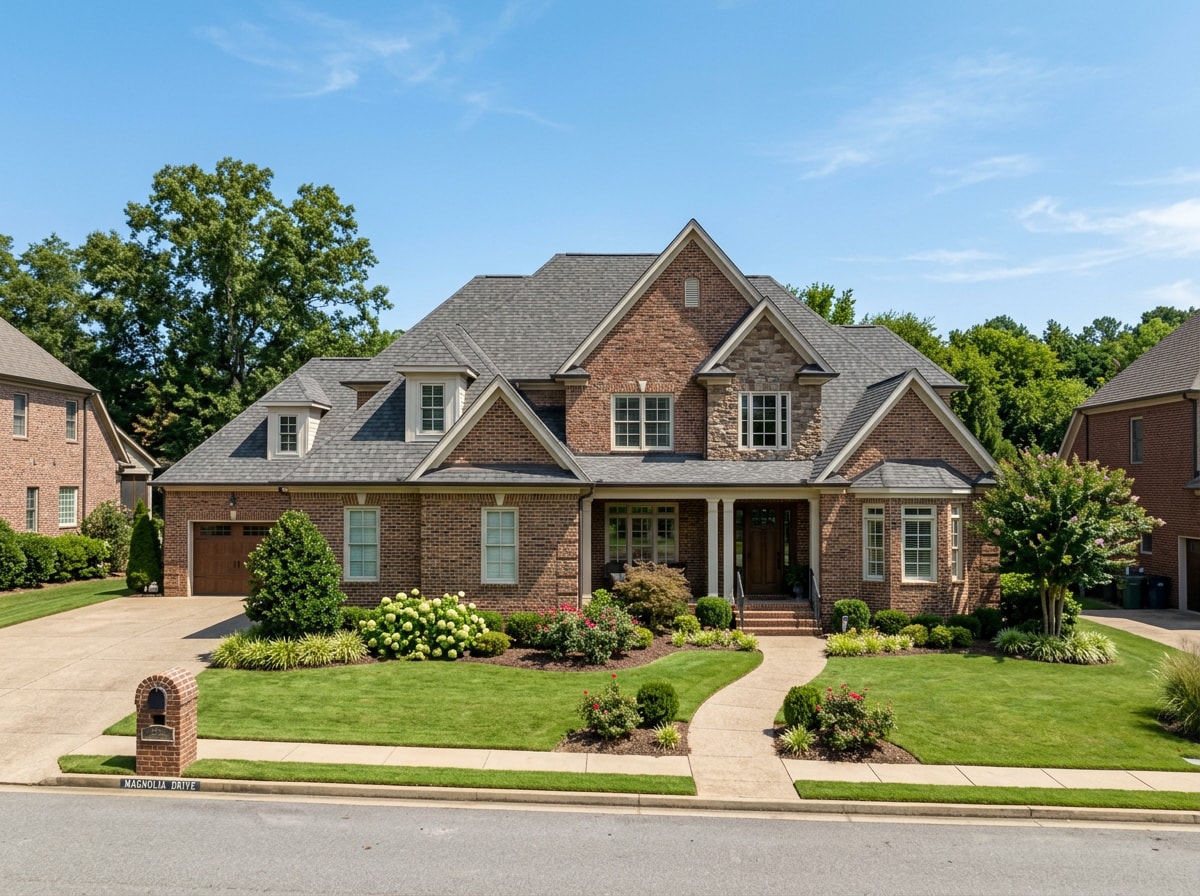
What Factors Go Into General Contractor Markup?
Markup isn't one flat number applied across the board. Contractors blend different markups for materials, labor, overhead, and subcontracted work, and each bucket behaves differently.
Materials
Material markup covers the cost of raw materials, calculated as a percentage of the contractor's cost price. If a contractor pays $1,000 for materials and applies a 10% markup, the customer pays $1,100 for those same materials.
Material markup usually runs 7.5% to 10%, though it can climb toward 20% on specialty items that need extra sourcing, storage, or careful handling. Custom finishes and anything with a long lead time tend to push that percentage up.
Labor
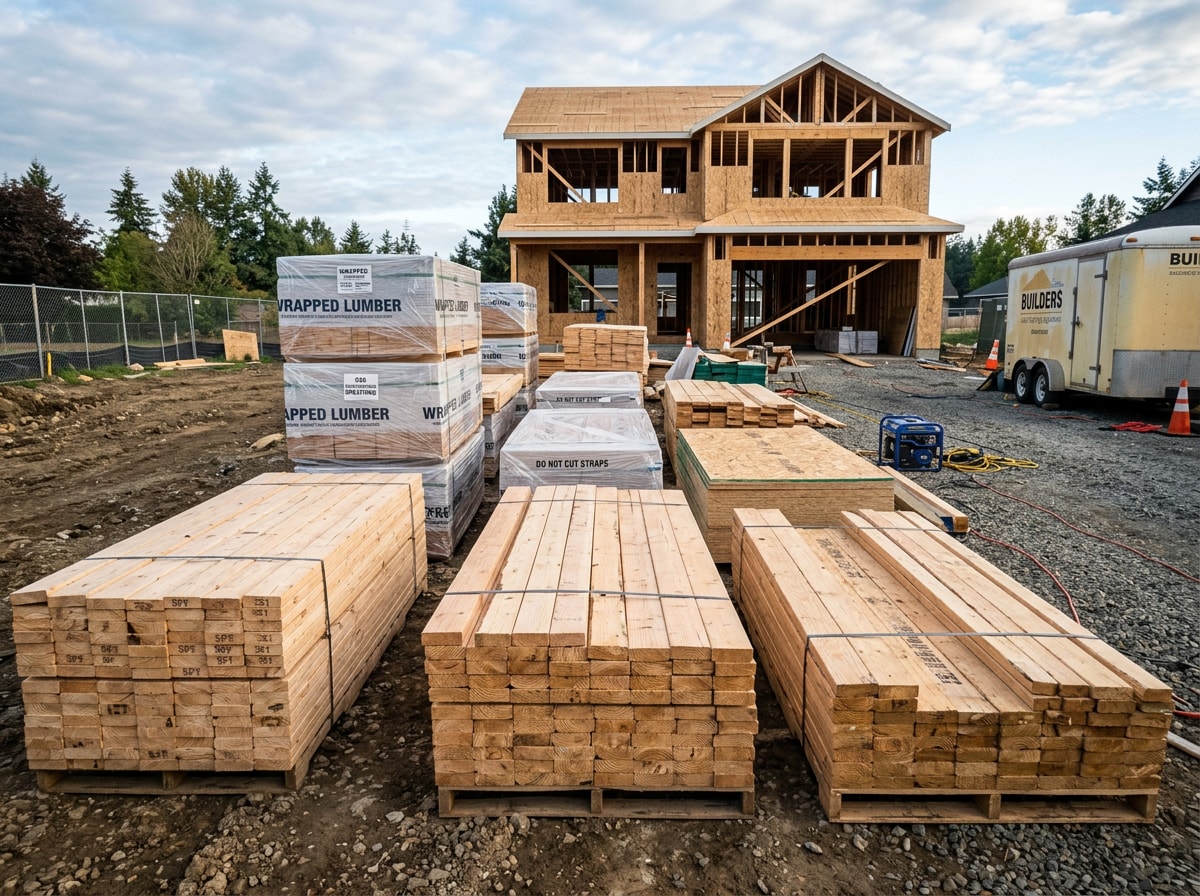
Labor markup swings far wider than material markup, commonly ranging from 20% to 50%. That range isn't arbitrary.
Labor markup has to absorb supervision time, scheduling risk, and regional wage swings. A single subcontractor rate shift in one trade can move project profitability more than a materials line item ever will.
Overhead
Overhead covers the "soft costs" a contractor has to recover before any profit kicks in:
- Office rent and utilities
- Business insurance and bonding
- Licensing and permit fees
- Administrative staff and payroll
- Marketing and lead generation
None of these show up as a visible line item on your invoice, but markup has to fund them anyway. These costs are fairly fixed regardless of job size, which is part of why smaller projects often carry a higher percentage markup than larger ones.
Subcontractor Markup
When a general contractor hires a subcontractor, they typically add a markup on top of that sub's invoice. This isn't double-dipping. It compensates the GC for coordinating schedules, managing quality, and carrying the liability if the subcontractor's work falls short. Markup on subs is usually separate from, and often lower than, markup on the contractor's own crew labor.
How to Calculate General Contractor Markup
At its core, markup is the difference between what's charged for the work and what it actually costs to complete it. The formula below turns that idea into a number you can check against a bid.
Calculate the Markup Percentage
Markup percentage is calculated as: Markup = Gross Profit ÷ Cost × 100. If a project costs $150,000 and the contractor wants $50,000 in gross profit, the markup percentage is 50,000 ÷ 150,000 × 100, or roughly 33%.
Apply the Markup
Once the percentage is set, it gets added to total cost to produce the final selling price. On a $75,000 kitchen remodel with a 20% markup, the math is straightforward: $75,000 × 1.20 equals a $90,000 final bid. The $15,000 difference is what covers overhead, insurance, permitting, and profit on that specific job.
Basic pricing principles back this up well beyond construction. The University of Maine Cooperative Extension's small business pricing bulletin makes the same point that applies directly to contractor bids: prices need to be high enough to cover total costs and leave a reasonable profit, while still staying competitive enough that customers are willing to pay them.
Why a Low Markup Is a Red Flag
A markup far below the normal 20% to 30% range is a warning sign, not a bargain. Unusually low bids often mean a contractor is cutting corners on materials, skipping adequate insurance, or planning to make up the difference later through change orders once work has already started.
Before signing anything, verify the contractor's license and insurance directly rather than judging the bid on price alone. The Alabama Licensing Board for General Contractors runs a public license roster search that confirms a contractor is properly credentialed for projects in Vestavia Hills and beyond, and it takes less time than re-reading a confusing quote.
Ready to compare a quote against a real local number? Request a free, line-itemized estimate and we'll show you exactly what's behind the markup on your project.
FAQ
How is the markup percentage calculated?
Markup percentage is calculated by dividing gross profit by total costs and multiplying by 100. The result shows how much a contractor adds on top of actual costs to reach the price you're quoted.
Can markup be negotiated with a contractor?
Markup is set at the contractor's discretion and can vary project to project. There's some room to negotiate on larger jobs or repeat-client relationships, but pushing a contractor far below a sustainable markup usually backfires through cut corners or a slower timeline.
Is markup the same as profit margin?
No. Markup is calculated on cost, while margin is calculated on revenue, which is why the two numbers can look very different on the same job. See the Markup vs. Profit Margin section above for a worked example.
What is a reasonable markup for a general contractor?
For most residential work in the Vestavia Hills area, a blended markup of 20% to 30% is reasonable in 2026. Anything well under that range on a full remodel or addition deserves a closer look at what's being left out.
Does a general contractor markup on subcontractors too?
Yes. GCs typically add a markup on top of a subcontractor's invoice, usually lower than the markup applied to their own crew's labor, to cover scheduling coordination and liability for that sub's work.
Do I need to check a contractor's license before accepting a bid?
Yes, every time. In Vestavia Hills, residential work over $10,000 requires a current Alabama Home Builders card and a city business license, and commercial work over $50,000 requires a state general contractor's license. Confirming this before you sign protects you more than comparing a few bid totals.
Before you sign anything, it's worth reading our guide to hiring a custom home general contractor in Vestavia Hills for the full list of questions to ask before a project starts. And if you're ready to put real numbers behind your project, get your free estimate from our team today.