A new construction plumber in Vestavia Hills, AL does a fundamentally different job than the technician who shows up for a leaky faucet. They're building an entire water, drain, and gas system from a blank slate, on a schedule tied to your framing crew, your inspector, and your move-in date. Get this piece of the build wrong and you'll be living with it for 30 years.
This guide breaks down what the work actually involves, who is legally allowed to pull the permit, and what a fair quote looks like before you sign anything.
What New Construction Plumbing Actually Covers
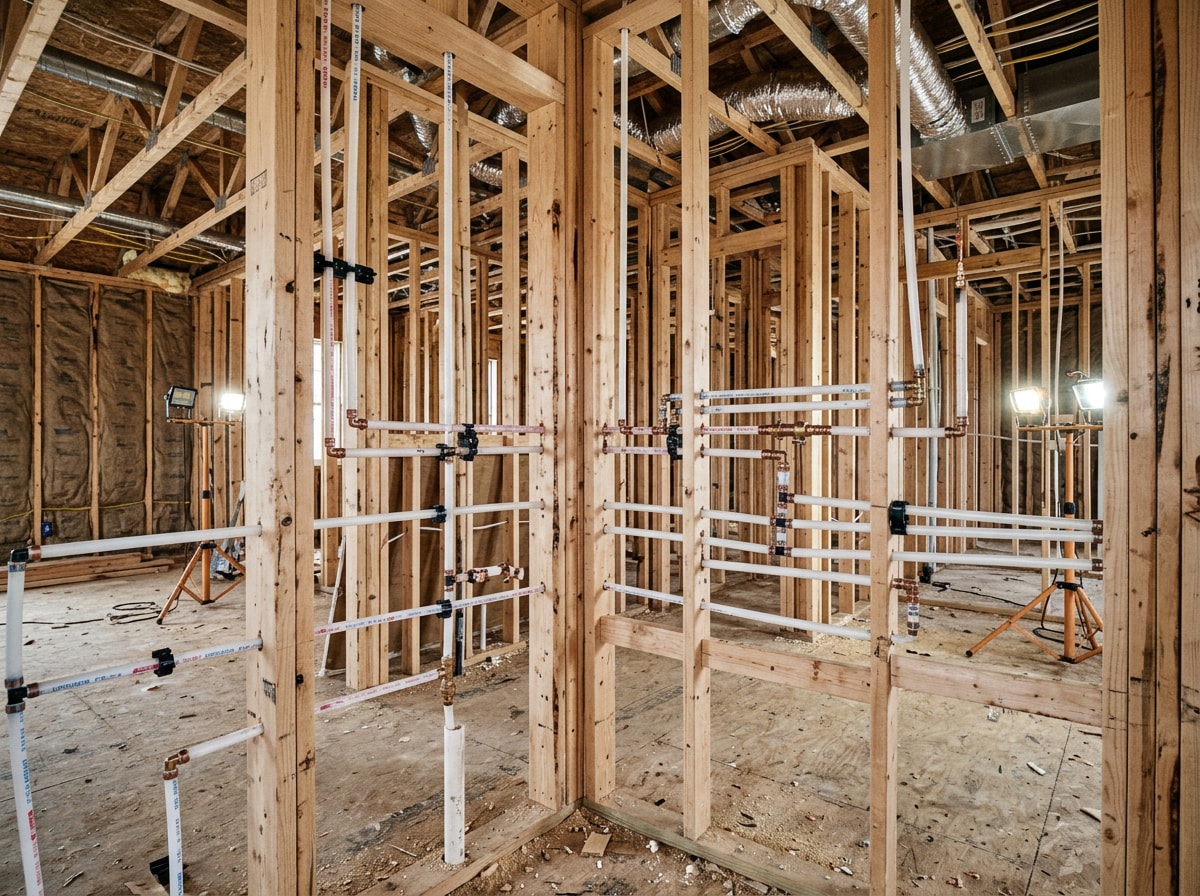
New construction plumbing means installing the water supply, drain-waste-vent (DWV), and gas systems from scratch, not repairing something that already exists. On a single-family build, that includes underground water and sewer lines, in-wall supply and drain piping, vent stacks through the roof, gas line rough-in for appliances, and the final trim-out of every fixture.
It applies the same way whether you're building a custom home, an addition, or a ground-up commercial space in Vestavia Hills. Our custom home builder teams coordinate this work alongside framing, foundation, and site crews so the plumbing rough-in lands on schedule instead of holding up drywall.
(Note: replace {{SITE_URL}} links below exactly as shown — markdown rendering above is illustrative only.)
Who Can Legally Pull the Plumbing Permit
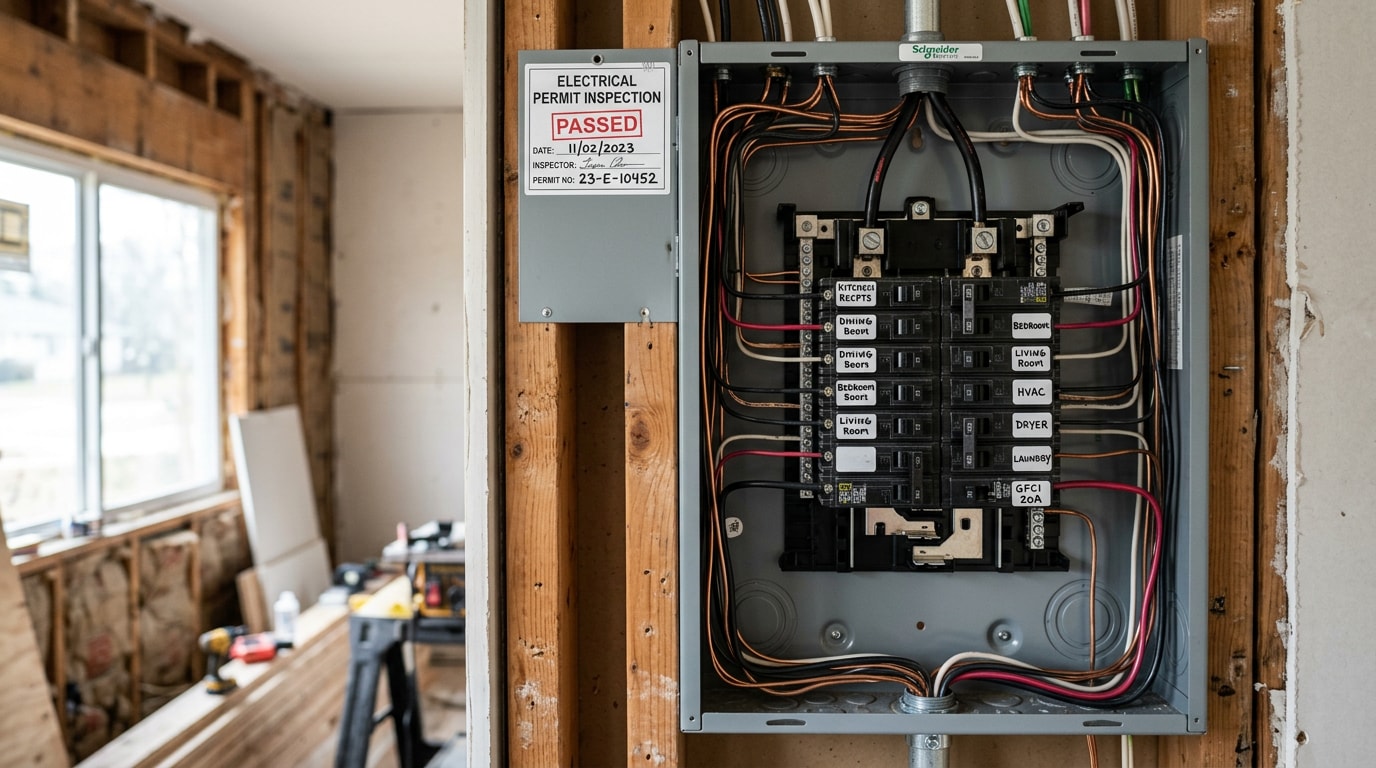
This is the part most homeowners get wrong, and it matters more than almost anything else in this guide. In Alabama, a general contractor's license does not authorize plumbing work or plumbing permits. Only a contractor holding an active Master Plumbing card from the Alabama Plumbers and Gas Fitters Examining Board can pull a plumbing permit, even on a job the general contractor is managing.
The City of Vestavia Hills enforces this directly. The city has adopted the 2021 International Plumbing Code along with the 2021 International Building Code, International Residential Code, and International Gas Code, and requires a current Master Plumbers or Gas Fitters card plus a city business license before any plumbing or gas work begins.
In practice, this means your general contractor manages the schedule, but a separately licensed plumbing subcontractor pulls the permit and signs off on the plumbing scope. We cover this relationship in more detail in Can a General Contractor Pull a Plumbing Permit in Homewood, AL?, which applies the same way under Vestavia Hills' adopted codes.
The New Construction Plumbing Timeline
Plumbing doesn't happen in isolation. It's locked to the construction sequence, and skipping a step creates delays that ripple through the whole project.
- Site preparation and utility planning — water, sewer, and gas tap locations get mapped before dirt moves. See our site preparation process for how this ties into grading and drainage.
- Foundation and underground rough-in — supply and drain lines under the slab or crawlspace go in before the foundation is poured or the crawlspace is closed.
- Above-grade rough-in — after framing, supply lines, DWV piping, and gas lines get run through walls and floors before insulation and drywall.
- Rough-in inspection — the city's Building Safety Department inspects before drywall closes anything in. No same-day inspections are performed, and 24-hour notice is required.
- Trim-out — once drywall and flooring are finished, fixtures, faucets, water heaters, and appliances get connected.
- Final inspection and approval — the system is pressure-tested and signed off before occupancy.
Every stage has to pass before the next one starts. That sequencing is also why hiring a plumber late in the process almost always costs more: redesigning a layout after framing is up means tearing into finished work.
Why Vestavia Hills Soil and Water Conditions Matter
Soils across the Birmingham area, including Vestavia Hills, commonly include red, clayey subsoils tied to the Madison, Pacolet, and Cecil soil series, which are extensive in this part of the Piedmont. Clay-heavy soil shifts as it wets and dries, and that movement stresses underground pipe joints and foundation penetrations over time.
That's part of why foundation and crawlspace moisture management isn't a separate conversation from plumbing, it's connected. If underground lines or grading aren't handled correctly, the same soil movement that stresses pipe joints also pushes water toward your foundation. Our foundation waterproofing and crawlspace waterproofing teams see this overlap constantly on older Vestavia Hills properties where plumbing leaks and foundation moisture show up together.
Most new builds in this market now use PEX or CPVC supply lines instead of older metal pipe, since both resist corrosion and flex with ground movement better than rigid materials.
New Construction vs. Established Homes
| Factor | New Construction | Established Homes |
|---|---|---|
| Pipe material | PEX, CPVC | Galvanized, cast iron, mixed repairs |
| Common issues | Minor code corrections at inspection | Corrosion, leaks, pressure loss |
| Inspection stage | Scheduled rough-in and final | Reactive, as problems arise |
| Permit holder | Licensed plumbing subcontractor | Varies; often owner-initiated repair |
Older Vestavia Hills homes often still carry sections of galvanized pipe or mixed repair materials from decades of patch work. New construction starts clean, but only if the rough-in and inspections are handled correctly the first time.
What a Fair New Construction Plumbing Quote Includes
Plumbing is one of the larger line items in a new build, and it's worth knowing roughly where it should land before you compare bids. According to NAHB's 2024 Cost of Constructing a Home survey, plumbing (excluding fixtures) accounts for about 6.3% of total construction cost on an average single-family home, with plumbing fixtures adding close to another 2%.
A complete quote should spell out, separately:
- Rough-in labor and materials (supply, DWV, gas lines)
- Trim-out labor and fixture installation
- Permit fees and required inspections
- Pressure testing before drywall closes
If a bid lumps all of this into one number with no breakdown, ask for an itemized version before you sign. Vague scopes are where change orders come from later.
How a Custom Home Builder Fits Into This Process
A general contractor doesn't replace your plumber, they coordinate the sequence so plumbing, electrical, HVAC, and framing don't collide on the same week. Our residential construction and custom home construction teams build the schedule around inspection windows, which matters in Vestavia Hills since the city requires 24-hour notice and runs inspections only in two daily windows on weekdays.
We've managed enough Vestavia Hills rough-in inspections to know which scheduling mistakes cost builders a week versus a day. That's the kind of detail that doesn't show up in a quote but shows up in your move-in date.
Vestavia Hills Neighborhoods We Build In
Coverage spans the full Vestavia Hills area, including Altadena, Dolly Ridge, Liberty Park, Rocky Ridge, Shades Mountain, Cahaba Heights, and properties along Columbiana Road and Highway 31. See our Vestavia Hills, AL service area page for the full scope of what we handle locally.
Cahaba Heights blends established homes with active new-construction growth, which means plumbers there need to be comfortable with both PEX manifold systems in new builds and galvanized-era repairs in older ones.
Ready to talk through your build? Get a free estimate and we'll walk through the plumbing, foundation, and site prep scope together before you commit to a contractor.
FAQ
How much does new construction plumbing cost in Vestavia Hills?
There's no single Vestavia Hills-specific rate published, but nationally, new construction plumbing commonly runs in the $4.50-per-square-foot range for rough-in and finish work combined, according to industry cost surveys. For a 2,000-square-foot home, that typically lands between $8,000 and $12,000, though fixture count, pipe material, and layout complexity move that number up or down.
Can a general contractor pull the plumbing permit for my new build?
No. In Alabama, only a contractor holding a current Master Plumbing card from the Alabama Plumbers and Gas Fitters Examining Board can pull a plumbing permit. Your general contractor can manage the project, but the plumbing scope has to be permitted and signed off by a licensed plumbing subcontractor.
How early should I bring a plumber into a new construction project?
Bring plumbing input in during the design phase, before foundation work starts. Pipe routing, fixture placement, and gas line runs are far cheaper to plan on paper than to redesign once framing and drywall are in place.
How long does new construction plumbing take?
For a typical single-family home, plumbing runs from rough-in to final inspection across several weeks, not days. Exact timing depends on permitting turnaround, inspection scheduling, and weather delays, all of which can affect Vestavia Hills builds given the city's limited daily inspection windows.
Do you serve Liberty Park and other Vestavia Hills neighborhoods?
Coverage depends on the exact property location, since some addresses near Vestavia Hills' edges cross into neighboring jurisdictions. Confirm your address against our service area before assuming coverage, or just contact us and we'll check it for you.
What pipe material is standard in new construction now?
Most new builds in the Vestavia Hills area use PEX or CPVC supply lines rather than copper or galvanized steel. Both resist corrosion better and tolerate the soil movement common in this area's clay-heavy ground more than rigid metal pipe does.
Start your project at our homepage to see the full range of services we coordinate alongside new construction plumbing, from site prep to foundation to final trim-out.